


Smart Contract
A smart contract is a program stored on a blockchain that executes automatically when its predefined conditions are met. Because the code and its results live on the chain, the outcome is enforced by the network rather than by a bank, broker or court.
How it works
A developer writes the contract’s logic — for example, “release these funds when both parties have deposited” — and deploys it to a smart-contract platform such as Ethereum. Once deployed, anyone can call its functions. Every node runs the same code and must reach the same result, so the contract behaves identically for everyone and cannot be quietly changed.
Why it matters
Smart contracts are the building blocks of decentralized finance, NFTs and DAOs. They remove the need to trust a middleman, but they also mean that bugs are public and exploitable: a flaw in the code can be drained by anyone before it is fixed, which is why audits matter.
Example
A decentralized exchange is a set of smart contracts that swap one token for another and pay liquidity providers automatically, with no company holding the funds.
Smart Contract: Frequently Asked Questions
How is a smart contract different from a normal contract?
Can a smart contract be changed after it is deployed?
What can smart contracts actually be used for?
Latest news

5 Ways Blockchain Technology Is Evolving the Online Casino Industry
5 Ways Blockchain Technology Is Evolving the Online Casino Industry
 Corinne Heller
4 min read
Corinne Heller
4 min read
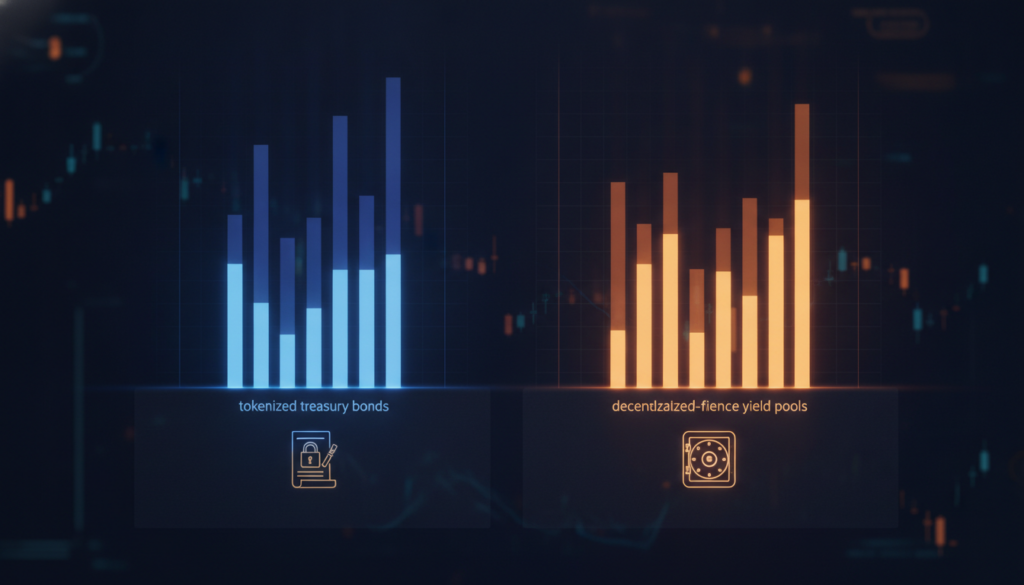
Tokenized US Treasuries vs. DeFi Staking: Where Institutional Yield-Seekers Are Allocating in 2026
With on-chain tokenized Treasuries offering 4.8% and DeFi stablecoin lending offering 4–6%, institutions face a genuine choice. We compare risk-adjusted yield, liquidity,…
 Ruholamin Haqshanas
2 min read
Ruholamin Haqshanas
2 min read

DeFi Total Value Locked Passes $150 Billion: Aave V4 and Uniswap V4 Drive Institutional Adoption
DeFi TVL surpassed $150B for the first time since the 2021 bull cycle as Aave V4's unified liquidity model and Uniswap V4…
Corinne Heller
2 min read