
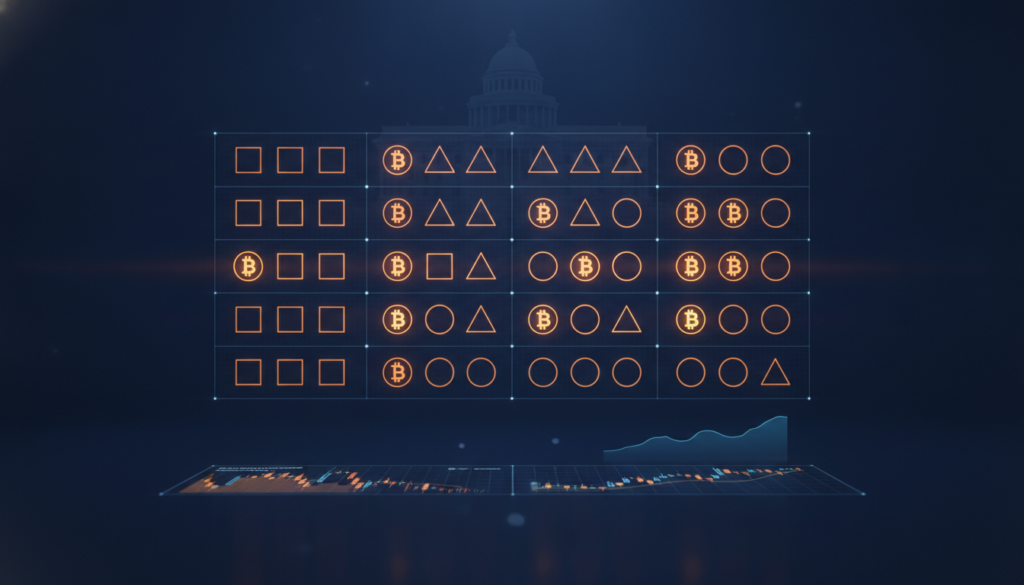
The US Securities and Exchange Commission’s 2026 Digital Asset Regulatory Framework represents the most significant regulatory clarification for the crypto industry since Bitcoin’s classification as a commodity in 2013. While details continue to evolve, the framework has provided meaningful guidance on which digital assets fall under the SEC’s jurisdiction — and which do not.
The Three-Bucket Framework
The SEC’s framework categorises digital assets into three broad buckets:
- Commodity Digital Assets: Bitcoin (BTC) and proof-of-work assets with sufficiently decentralised networks fall under CFTC jurisdiction. No change from prior guidance.
- Security Digital Assets: Tokens sold in initial offerings with an expectation of profit from a common enterprise meet the Howey Test and require SEC registration.
- Digital Commodities (Emerging Category): Sufficiently decentralised proof-of-stake assets — including Ethereum — are treated as digital commodities under a new safe harbour provision.
Ethereum’s Status: Definitively Resolved
Ethereum’s classification as a commodity (not a security) has been a decade-long debate. The 2026 framework formally closes this: ETH satisfies the safe harbour’s decentralisation criteria (no single entity controls development; validator set exceeds 1 million), and the SEC has confirmed it does not intend to regulate ETH as a security.
The legal community has been active in analysing the framework’s implications — the r/CryptoRegulation subreddit has running commentary from attorneys, compliance officers, and policy analysts on the practical enforcement implications.
Which Tokens Are Affected?
Tokens most likely to receive securities treatment include: assets where a single foundation or VC consortium controls majority protocol development, assets that raised capital via pre-sales with explicit profit promises, and assets where the issuing team retains material undistributed token supply. The framework does not provide an exhaustive list, but the SEC has indicated enforcement actions targeting several unnamed projects.
Exchange Compliance Implications
For centralised exchanges, the framework triggers a delisting or re-registration requirement for any token classified as a security. Coinbase and Kraken have both indicated they are working through their token lists against the new framework criteria. Tokens delisted from major US exchanges face significant liquidity and price pressure — a risk that is now explicitly priced into altcoin risk premiums.